
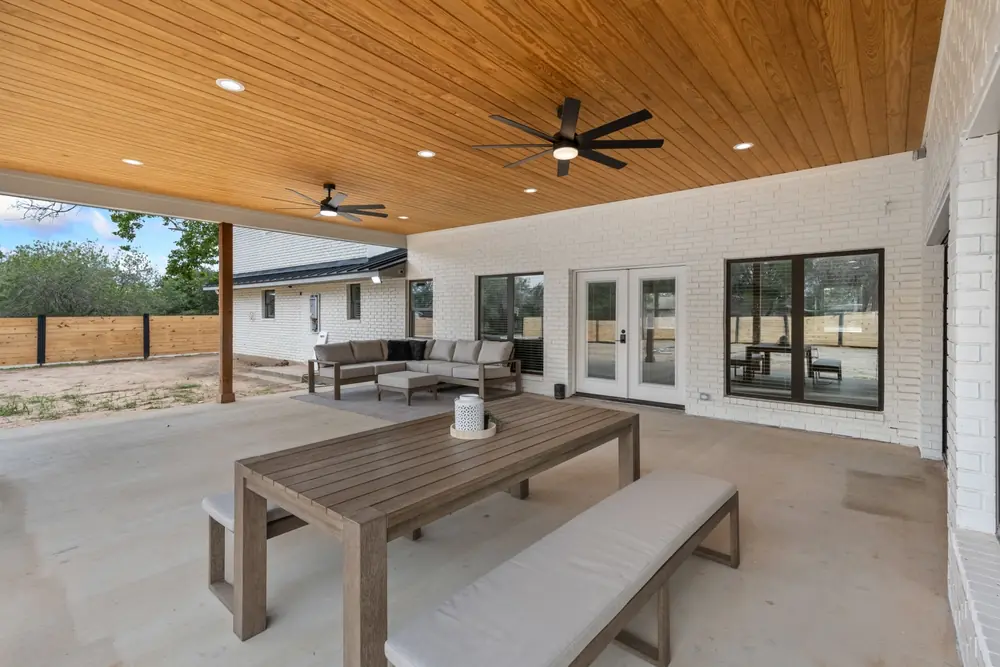
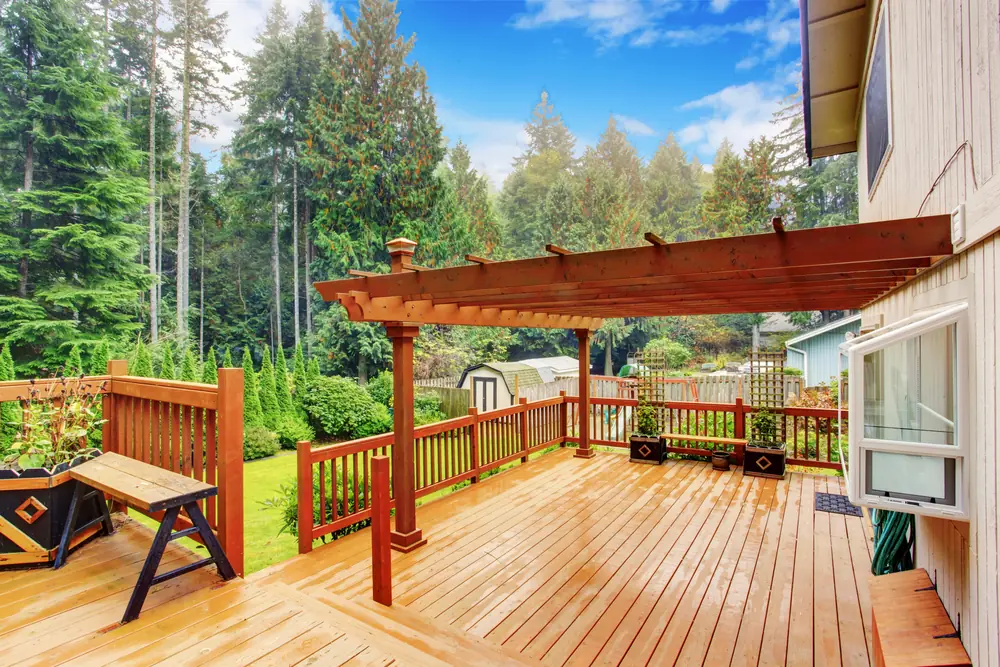
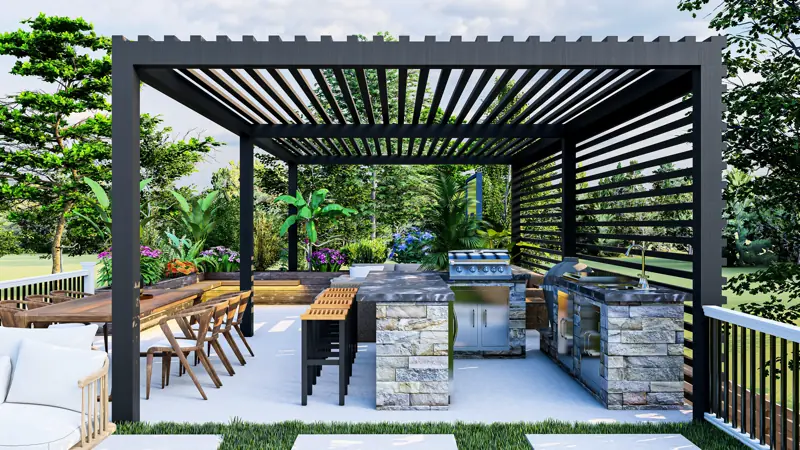
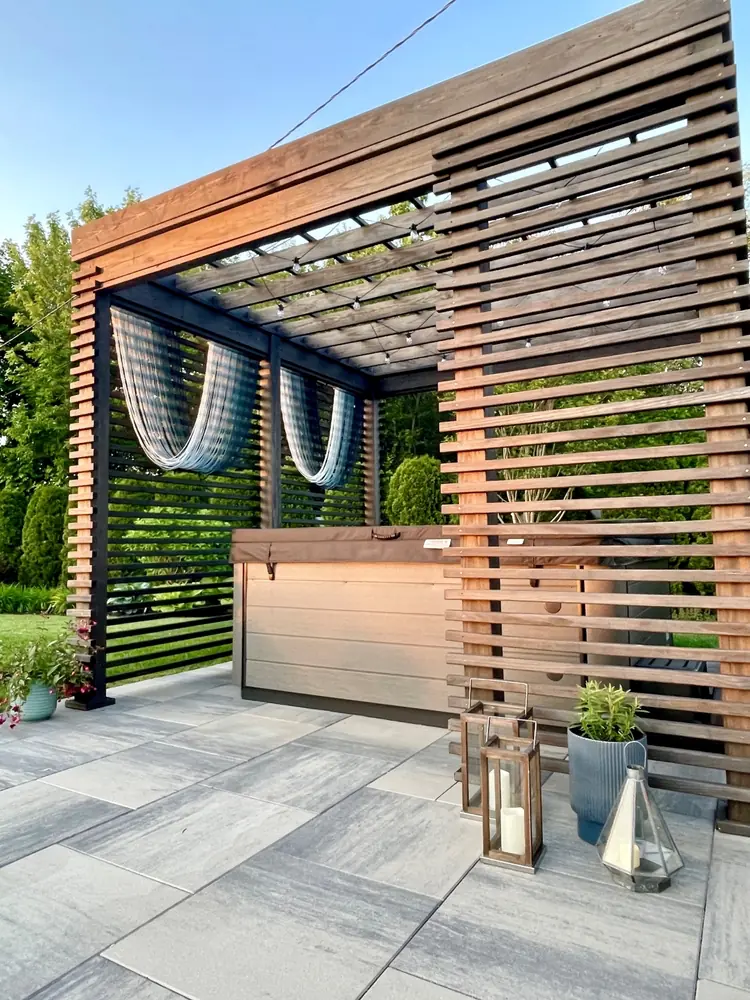
More shade doesn’t always mean less light. Outdoor designers are shifting away from heavy structures that block the sun and moving toward features that let light flow while still offering comfort.
The goal is control, not darkness. Homeowners want outdoor spaces that feel open, bright, and usable throughout the day, not closed off or gloomy. This new approach allows sunlight to filter in at the right angles, creating balance instead of harsh glare.
By shaping how light moves across patios, decks, and gathering areas, designers are creating outdoor spaces that feel intentional and inviting. It’s a smarter way to enjoy natural light without sacrificing shade or atmosphere.
How Do Outdoor Feature Designers Control Natural Light Without Blocking It?
Designers have started treating sunlight like audio in a room. You don’t want silence, and you don’t want blaring speakers. You want the right levels in the right places.
Controlling natural light outdoors usually comes down to direction, diffusion, and timing.
Direction: stopping glare without killing brightness
Glare is the enemy, not light itself. That’s why designers pay attention to angles, especially in the late afternoon when the sun gets nosy and starts shining sideways.
A few common tactics:
- Overhead slats that create striping and soften direct rays
- Angled louvers that redirect sunlight upward or away from seating zones
- Partial side screens on the west-facing side to cut the worst evening glare
Instead of building a roof that wipes out the sky, they build features that “edit” the sun.
Diffusion: turning harsh light into soft light
Diffusion is the magic trick. It’s the difference between standing under a spotlight and standing near a big bright window. Same energy, totally different comfort.
Designers use:
- Semi-translucent canopies that scatter light instead of stopping it
- Lattice and slatted designs that create a gentle pattern of shade
- Textured materials that break up harsh beams
It’s also why so many newer patios look brighter even when they’re shaded. You still feel outdoors, just without the squinting.
Timing: designing for how the sun moves
If your outdoor space feels great at 10 a.m. but miserable at 4 p.m., that’s not “bad luck.” That’s design ignoring the sun’s schedule.
Outdoor feature designers plan around:
- Morning vs. afternoon exposure
- Seasonal changes (summer high sun vs. winter low sun)
- How your home casts shadows across the yard
That’s why adjustable options, like louvered systems, are becoming such a favorite. Your shade solution shouldn’t be stuck in one mood forever.
What Materials Allow Outdoor Spaces To Manage Light While Staying Open?
A light-filtering structure only works if the materials support the goal: open, airy, and comfortable.
Here are the materials that do that best, and why designers keep choosing them.
Aluminum (especially for modern pergola systems)
Aluminum is popular for a reason: it’s sleek, durable, and handles modern shapes well. When paired with louvers or well-spaced slats, it becomes a precision tool for light control.
Why it works:
- Doesn’t warp like some woods can
- Handles humidity and heat reliably
- Supports adjustable designs (like louvers) without feeling bulky
If you like clean lines and a “this will still look great in five years” feel, aluminum is a solid pick.
Wood slats (for warm, filtered light)
Wood is the classic for a reason. It naturally softens the look of a space, and slatted wood overhead creates that dreamy, resort-like pattern.
Wood shines when you want:
- A cozy, organic look
- A gentle shade pattern rather than a solid block
- A structure that blends into landscaping
The key is choosing the right wood and finishing it properly so it holds up.
Polycarbonate panels (light without the burn)
This is one of the most practical “let light in, but calm down” solutions. Polycarbonate can be clear, tinted, or opaque, and it’s often used when you want brightness but less heat and UV impact.
Great for:
- Patio areas where you still want a bright “daytime” feel
- Spaces that feel too dark under traditional roofing
- People who love sunlight but not sun damage
Outdoor shade fabrics (diffusion with style)
Modern outdoor fabrics are not the flimsy stuff from years ago. Today’s shade sails and canopy fabrics are designed to handle UV, weather, and tension while creating a soft, flattering light.
They’re especially good if you want:
- A lighter visual footprint than a full structure
- A quick way to cut glare over seating or dining areas
- Something that adds color and personality
Screens and slatted side panels
Side panels are underrated. Most sun discomfort isn’t from overhead. It’s from side-angle sun, especially late-day western light.
Designers use:
- Slatted privacy panels
- Mesh-style screens
- Decorative laser-cut panels (depending on style)
These keep the space breathable while still cutting the “sun in your eyes” problem.
Why Modern Outdoor Designs Focus on Light Filtering Instead of Full Shade?
There’s a reason “full shade” is losing its crown. It’s not that full shade is bad. It’s that it’s often too much of a good thing.
Because people don’t want to feel boxed in
When you block all the light, you often block the sky, the breeze, and the whole point of being outside. Full shade can make a patio feel like an extra room with fewer comforts.
Filtered light keeps the space feeling:
- Open
- Bright
- Connected to the outdoors
Because “bright shade” looks better
Harsh sun creates harsh shadows. Full shade can create flat, dim lighting. Filtered light is the sweet spot. It makes people look better, food look better, plants look better, and the whole space feel more inviting.
It’s basically nature’s version of good indoor lighting.
Because it solves heat without killing the vibe
A lot of the heat problem is direct exposure, not brightness. Filtered shade reduces the intensity so you get comfort without turning the patio into a cave.
Because the space becomes usable more often
Modern homeowners want outdoor spaces they can actually use, not just admire. Light-filtering designs help your patio work across more hours of the day.
Instead of:
- “We only sit out here in the morning.”
You get:
- “We use this space every day.”
And that’s the whole point.
Because design trends are shifting toward layered outdoor living
The best outdoor setups aren’t one big slab of shade. They’re layered:
- A filtered-light overhead structure
- Optional side screening for late sun
- A mix of sun and shade zones for different activities
It feels intentional, and it gives people choices.
How Does Controlled Outdoor Lighting Improve Comfort and Visual Appeal?
This is where it gets fun, because light control isn’t just about comfort. It’s about making your outdoor space look like the kind of place you’d bookmark and say, “Yep. That’s the goal.”
Comfort: less glare, less heat, less squinting
Controlled light helps in the real-life moments:
- Reading a book without fighting reflections
- Eating dinner without the sun blasting one person at the table
- Hanging out without feeling like you need sunscreen as a personality trait
It can also reduce the temperature in key areas, especially when combined with good airflow.
Visual appeal: patterns, shadows, and depth
Designers love filtered light because it adds texture. Slatted shade creates moving patterns as the day changes, and it makes spaces feel dynamic instead of static.
It’s the difference between:
- A flat, plain ceiling effect
- And a living, shifting atmosphere
Better nighttime ambiance (yes, even though we’re talking about sunlight)
When your structure controls daylight well, it usually pairs better with lighting at night too. A pergola or overhead feature gives you natural places to add:
- String lighting
- Downlights
- Accent lighting
- Fans or heaters (depending on the setup)
You end up with a space that works 24/7, not just when the weather is perfect.
The “people stay longer” factor
A comfortable outdoor space changes behavior. People linger. Conversations stretch. Guests don’t immediately drift back inside. You stop treating the backyard like a bonus and start treating it like a favorite.
Here are a few quick signs your light is not under control yet:
- You avoid sitting in certain seats at certain times
- Your patio umbrella keeps migrating like it’s trying to escape
- You love the idea of outdoor meals but hate the reality
- Half your photos have someone squinting like they’re solving a mystery
If any of that feels familiar, you don’t need to block the sun. You need to train it.
Make Your Backyard Feel Like a Retreat, Not a Heat Trap
At Palmetto Pergolas, we help homeowners get the best version of outdoor light: bright, comfortable, and designed on purpose. If you’re tired of choosing between full sun and full shade, we’ll help you create a space that filters light beautifully and stays inviting all day.
Let’s design a pergola setup that fits your home, your style, and the way you actually live outside.