
There’s always that one detail that makes an outdoor space feel complete. You might not notice it right away, but when it’s missing, something feels off. More homeowners and designers are starting to pay attention to the architectural elements that quietly tie everything together. These details don’t scream for attention, but they bring balance, structure, and intention to outdoor spaces.
When done right, they turn patios, walkways, and yards into places that feel finished instead of unfinished. Understanding this element helps explain why some outdoor spaces feel polished while others feel like they’re still waiting for something.
What Architectural Element Helps Define and Complete an Outdoor Living Space?
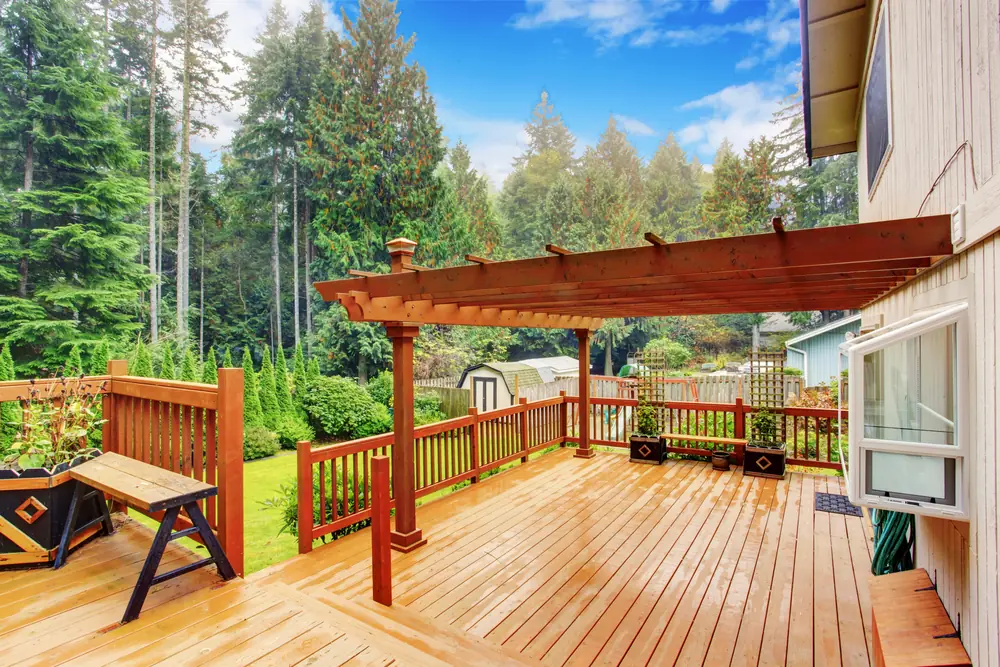
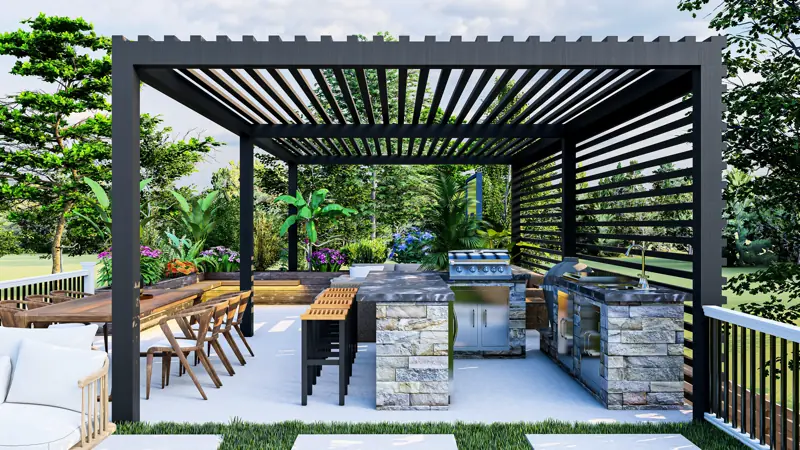
The pergola works because it does something outdoor spaces desperately need: it creates an organized frame around your living area.
Think about what makes a living room feel like a living room. It’s not just the couch. It’s the way the couch relates to the walls, the ceiling, the lighting, the rug, and the flow of the room. Outdoors, the “walls” are missing, and the “ceiling” is the sky. That can be beautiful, but it can also feel like your furniture is just floating in a yard.
A pergola changes that by providing:
- Overhead definition: a visual ceiling that makes the space feel intentional
- A focal point: something the eye naturally lands on, which makes the yard feel designed
- Clear zoning: dining area here, lounge area there, walkway over there
- Better comfort: filtered light and a sense of shelter without closing the space in
Even a simple pergola can turn a “we have a patio” backyard into a “this is where we hang out” backyard.
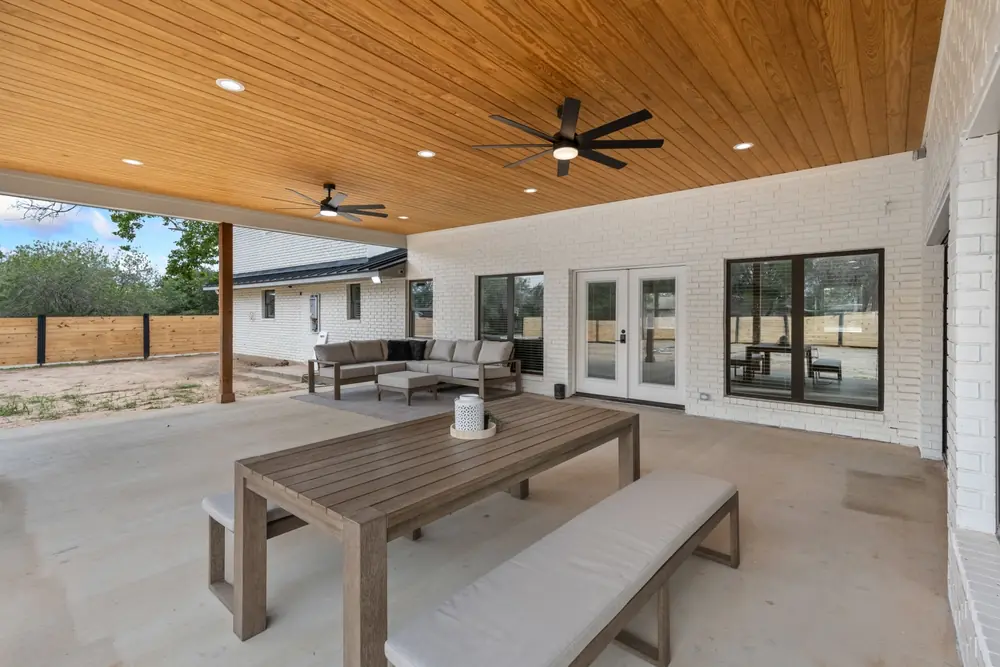
And if you’ve ever seen a backyard where everything feels like it belongs, there’s usually some form of overhead structure involved. Pergola, pavilion, covered patio. But pergolas have a unique sweet spot: they offer definition without making the space feel boxed in.
They’re the difference between:
- A patio that looks like a patch of concrete
- And a patio that looks like the outdoor extension of your home
That’s a big deal.
How Do Architectural Features Influence the Overall Look of Outdoor Areas?
Here’s the truth: outdoor furniture can be swapped out in an afternoon. Architectural features change the identity of the space.
A pergola isn’t just a feature. It’s a design statement. It tells people what the space is supposed to be. Is it modern and clean? Warm and rustic? Coastal and breezy? Minimal and functional? The structure sets the tone.
Architectural features influence outdoor areas in a few major ways:
They create proportion and balance
Backyards can feel “flat” because everything sits low to the ground. Furniture, fire pits, planters, grills. Even landscaping tends to live below eye level unless you have mature trees.
A pergola adds height. It brings the eye upward. It gives the yard dimension, which instantly makes it feel more high-end and more complete.
They add rhythm and texture
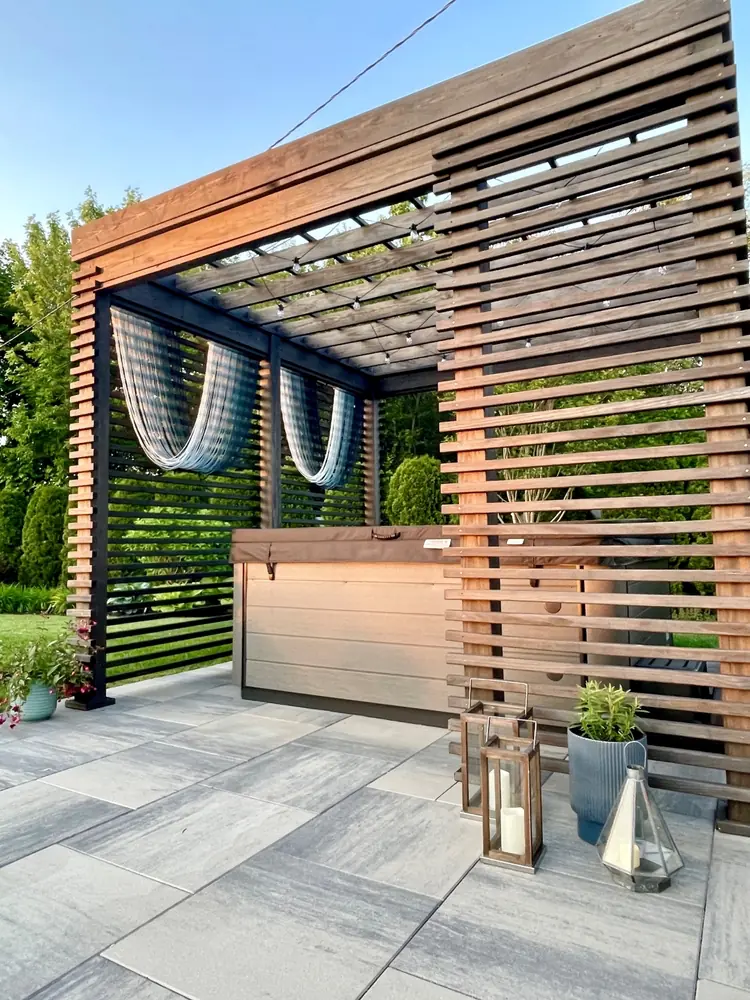
Slats, beams, posts, and lines create repetition, and repetition creates style. That’s why pergolas photograph so well. They add pattern without clutter.
And in real life, those patterns show up as shifting light and soft shade. It makes the space feel alive instead of static.
They strengthen the home-to-yard connection
A backyard can feel disconnected from the house, like two separate worlds. A pergola helps bridge that gap, especially when it matches or complements the home’s exterior.
This is where a lot of outdoor designs quietly fail: the house looks polished, but the yard looks like a different property.
A structure pulls it together.
They make “simple” look intentional
Without architectural cues, a simple backyard can look unfinished. With the right structure, the same exact furniture and landscaping can suddenly look curated.
You don’t always need more stuff. You need a stronger frame.
If you want a quick mental checklist for what architectural features change visually, it’s this:
- Scale (does the yard feel grander?)
- Definition (does the layout make sense?)
- Style (does it match the home?)
- Flow (does it feel like a space, not a spot?)
Pergolas score high on all of it.
Why Do Finished Outdoor Spaces Rely on Architectural Structure?
Because “finished” isn’t a vibe you can buy in a cart. It’s a result of design decisions that give the space purpose and cohesion.
A finished outdoor space usually has three things:
- A clear function
Dining, lounging, entertaining, relaxing, poolside seating, outdoor kitchen, etc. - A defined layout
Zones that don’t compete with each other and furniture that feels placed, not parked. - A structural anchor
Something that holds the whole scene together.
That third one is where pergolas come in.
Structure makes outdoor living feel real, not temporary
A backyard without structure can feel like a campsite: chairs, table, maybe a shade option that gets moved around all day.
A pergola makes it feel permanent. Like the space belongs there.
Structure solves the “floating furniture” problem
Ever look at an outdoor setup and feel like the furniture is stranded in the middle of the yard? That’s the absence of architectural framing. Indoors, walls and ceilings define the furniture. Outdoors, you need something else to do it.
Pergolas do that without sacrificing openness.
Structure improves comfort without closing the space
This is a big reason pergolas win over fully enclosed options. A finished outdoor space needs comfort, but most people still want fresh air, sunlight, and that outdoor feeling.
A pergola can provide:
- Partial shade to reduce heat
- Light filtering to reduce glare
- A “protected” feeling without full enclosure
And once you add comfort, people actually use the space. Which is kind of the whole point.
Structure creates a place for the extras that make spaces feel complete
You know what makes outdoor spaces feel finished fast? The details.
But details need somewhere to live. Pergolas create opportunities to integrate:
- Outdoor lighting (string lights, downlights, sconces nearby)
- Ceiling fans (depending on design)
- Curtains or screens (for privacy or side sun)
- Hanging plants or decorative elements (if that’s your style)
Without structure, those details become awkward. With structure, they become natural.
Here’s what I tell people: a pergola is like adding a frame to a great photo. The photo was already good. The frame makes it look final.
What Role Does Architectural Design Play in Outdoor Space Cohesion?
Cohesion is the difference between “nice backyard” and “wow, this feels like a resort.”
And cohesion doesn’t come from matching cushions. It comes from architectural design choices that repeat and connect across the space.
A pergola helps with cohesion because it creates a central design language. It introduces lines, materials, and proportions that you can echo elsewhere.
It creates a visual hierarchy
In cohesive design, not everything competes for attention. There’s a primary feature, and everything else supports it.
A pergola becomes that primary feature, and it helps the space feel organized instead of chaotic.
It ties elements together through repetition
Designers love repetition: matching finishes, repeating lines, consistent shapes.
A pergola’s beams, posts, and slats can echo:
- The home’s roofline or trim
- The straight lines of pavers or decking
- The grid of windows or doors
- The structure of fencing or railings
Suddenly the backyard feels like an extension of the home instead of a separate project.
It improves flow and “movement” through the space
Cohesion isn’t just visual. It’s how you move through the yard.
A pergola can guide flow by:
- Marking transitions (from inside to outside)
- Creating a destination (a lounge zone or dining zone)
- Defining pathways (walkway pergolas are underrated)
When flow is clear, the yard feels intentional. When flow is messy, even expensive upgrades feel scattered.
It helps the backyard feel designed for people, not just landscaping
Landscaping can be beautiful, but it doesn’t automatically create livable space. Architecture supports humans: seating, gathering, comfort, boundaries.
Pergolas sit right at that intersection. They work with landscaping, but their job is to make the yard livable.
If you’re aiming for cohesion, here are a few practical things a good pergola design supports:
- Aligning the pergola with doors, windows, or existing hardscape
- Matching material tones to the home exterior
- Coordinating lighting placement for evening use
- Defining “rooms” outdoors so furniture layouts make sense
That’s how a backyard stops feeling like a collection of things and starts feeling like one complete space.
Let’s Give Your Backyard a “Now It Makes Sense” Moment
Turn the Patio Into the Place Everyone Naturally Walks Toward
At Palmetto Pergolas, we build pergolas that do more than look good. We design structures that make outdoor spaces feel finished, balanced, and genuinely enjoyable to use. If your backyard feels close but not quite complete, there’s a good chance the missing piece is architectural.
Let’s create a pergola that fits your home’s style, improves comfort, and finally gives your outdoor space the definition it’s been missing.