
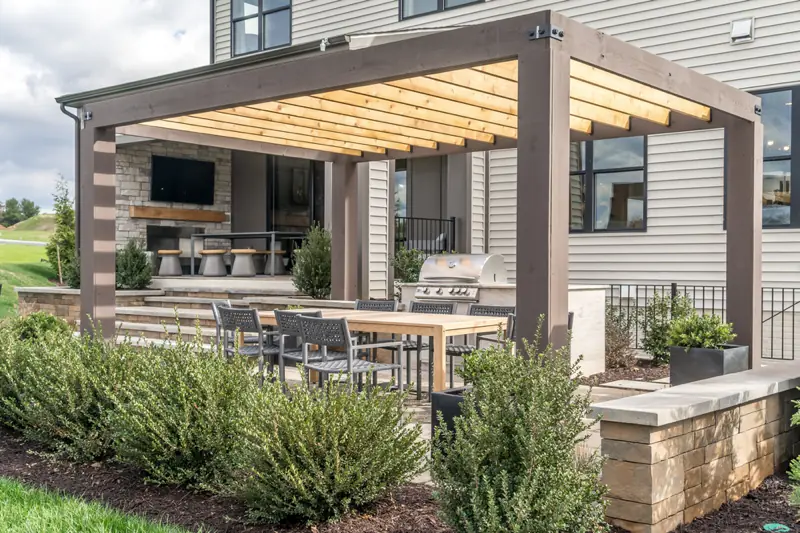
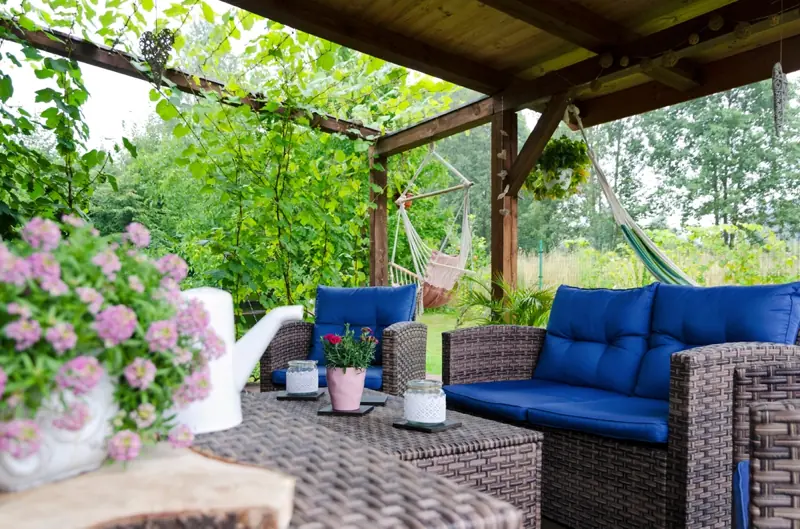
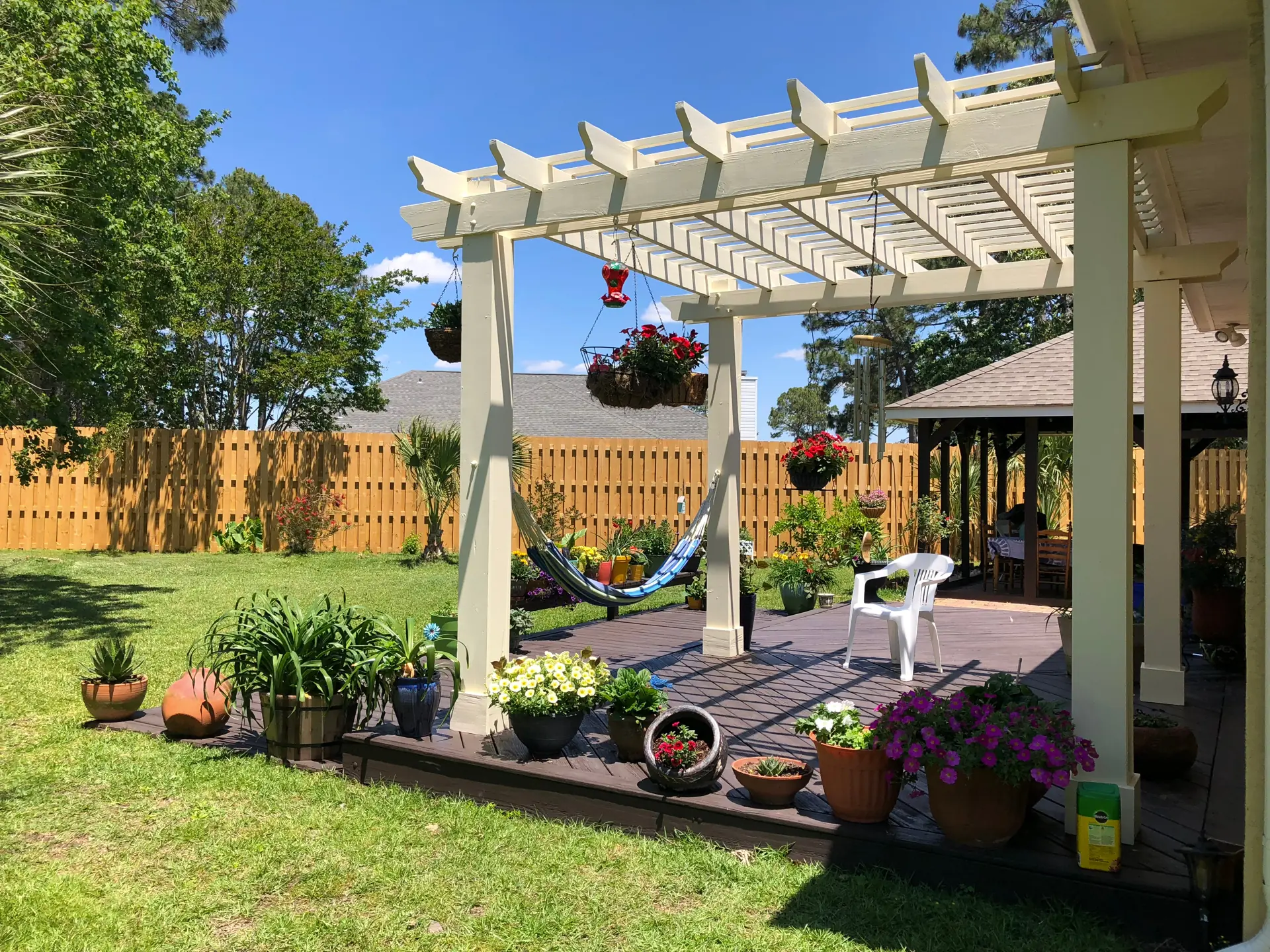

Thinking about adding shade to the space you already love? Installing a pergola on an existing deck or patio can be a smart way to make your outdoor area more comfortable and stylish.
But before you start, it’s important to know if your surface can safely support the structure. A pergola on existing deck may need extra support, while a patio often depends on the material, size, and condition of the base.
In this guide, we’ll walk through what to check before pergola installation and what to know if you want to install pergola on patio in Rock Hill, SC.
Is it Safe To Build a Pergola on a Deck?
The short answer is yes, it can be safe to build a pergola on a deck, but it depends on the deck’s condition, size, and the material used. Before you begin construction, it’s important to assess whether the deck can support the weight of the pergola and its additional load, such as wind or snow.
Factors to Consider
Deck Material: Wood decks are generally more flexible than composite or PVC decks. Wood decks can usually handle the weight of a pergola if they are structurally sound. However, composite decks may require additional support or reinforcement since they can have limitations on load-bearing.
Deck Condition: The condition of your deck is crucial. Older decks or those with rot or decay may not be able to support the pergola, even if they were built to hold weight in the past. Make sure your deck is in good condition and able to support the load of the pergola posts.
Deck Size and Layout: A deck that is too small may not accommodate the pergola without feeling cramped. You also need to make sure the deck has enough structural integrity to allow for proper post installation.
If you are unsure about the safety of your deck, it’s best to consult a professional who can assess the structure and ensure it’s safe for pergola on existing deck installation.
Do You Need Permits to Install a Pergola on a Patio?
In many cases, you may need a permit to install a pergola on a patio in Rock Hill, SC, especially if the pergola is attached to your home or if it is a large structure. Local building codes vary, so it’s always important to check with your local municipality before proceeding.
When Permits Are Required
Size and Height: If your pergola exceeds a certain height or size, it may require a permit. Most cities have rules that govern structures over a specific height, usually 10-12 feet.
Attached Pergolas: If the pergola is being attached to the house or another existing structure, it may require a permit since it could affect the building’s structural integrity.
Utility Lines: If your project involves digging to anchor posts or install any electrical components, such as lighting, you may need to request permission or get the area inspected to avoid utility lines.
How to Check
You can visit your local city or county government website for information about specific permits needed for your area. You may also want to contact your local building department or a professional pergola installation company who can help guide you through the process.
Obtaining the proper permits ensures your pergola is legally compliant and built to code, preventing future issues with inspections or resale.
What Hardware is Needed To Mount a Pergola on a Deck?
The right hardware is crucial to securing the pergola to your deck or patio. Using the correct fasteners and anchoring systems will ensure the structure remains stable and safe.
Essential Hardware for Deck Installation
Post Anchors: Post anchors help secure the pergola posts to the deck surface. These metal brackets are fastened to the deck’s structure and provide a solid base for the vertical posts.
Lag Bolts and Screws: Heavy-duty lag bolts are essential for anchoring the posts to the deck. These fasteners are strong enough to hold the pergola securely, especially in areas that experience high winds.
Deck Joist Hangers: If attaching the pergola to a wooden deck, deck joist hangers can be used to provide extra support and secure the posts to the deck’s joists for additional stability.
Brackets and Corner Braces: Corner brackets and braces provide extra structural reinforcement to ensure the pergola remains stable, especially in areas prone to high winds or heavy snow.
Importance of Proper Hardware
Using the right hardware is essential to prevent issues like wobbling, sagging, or shifting over time. Always choose high-quality, rust-resistant fasteners for outdoor use, as exposure to moisture and the elements can cause inferior materials to degrade.
When planning to install a pergola on a patio Rock Hill, SC, ensure you have the correct hardware before beginning the installation process to avoid delays and complications.
Can Composite Decks Support Pergola Weight?
Composite decks are a popular choice due to their durability and low-maintenance qualities. However, composite decks behave differently from traditional wood decks, so it’s important to consider whether your composite deck can support the weight of a pergola.
Composite Deck Strength
Composite decking is made from a combination of wood fibers and plastic, which makes it highly durable but also less flexible than wood. While composite decks are strong, they are not always as structurally supportive as wood decks, especially when it comes to supporting the additional weight of a pergola.
To ensure your composite deck can hold a pergola, you may need to add additional supports or reinforce the deck with extra posts and beams. For example, installing posts directly to the ground beneath the deck or adding additional joists can provide extra support.
Professional Assessment
If you’re unsure whether your composite deck can support a pergola, it’s wise to consult a professional who can evaluate the structure and recommend any necessary reinforcements. A structural engineer or experienced pergola installation team can help ensure the pergola is safely mounted.
How Do You Secure Pergola Posts To Concrete?
If you’re planning to install a pergola on a concrete patio, securing the posts properly is crucial to the structure’s stability and longevity.
Anchoring Methods for Concrete
Concrete Anchors: Concrete anchors are specifically designed to secure pergola posts to solid surfaces like concrete patios. These anchors are drilled into the concrete and hold the posts in place with bolts or screws.
Post Mount Brackets: Post mount brackets are used to attach the pergola posts to the concrete. These metal brackets are anchored into the concrete slab with masonry anchors and provide a secure base for the posts.
Epoxy or Adhesive: For lighter pergola structures, epoxy or concrete adhesive may be used to bond the posts to the patio surface. However, this method is not recommended for larger, heavier pergolas, as it may not provide enough strength to withstand high winds or storms.
Tips for Proper Installation
Pre-drill Holes: Before securing the posts to concrete, make sure to pre-drill holes in the concrete to accommodate the anchors or brackets.
Use High-Quality Fasteners: For concrete, ensure that the fasteners are made from corrosion-resistant materials to prevent rusting over time due to exposure to moisture.
Securing pergola posts to concrete ensures the structure remains stable and durable for years, even under adverse weather conditions.
Should You Hire a Professional For Deck-Mounted Pergolas?
While installing a pergola on an existing deck or patio can be a DIY project, it’s often best to hire a professional for the job. Here’s why:
Benefits of Hiring a Professional
Expert Assessment: A professional installer can assess your deck’s or patio’s structural integrity and determine if it can safely support the pergola.
Correct Hardware Use: Experienced installers know exactly what materials, hardware, and techniques to use for a secure and stable pergola installation.
Time-Saving: Pergola installation requires precision, and professionals can complete the project faster and more efficiently than an inexperienced DIYer.
Avoid Mistakes: A professional can help you avoid common pergola design mistakes, such as improper post placement or incorrect hardware use, which can lead to future problems.
Hiring a professional ensures that your pergola installation is done correctly, safely, and to the highest standard, giving you peace of mind and a beautiful, functional outdoor structure.
Final Thoughts
Adding a pergola to an existing deck or patio can be a great way to make your outdoor space more useful, comfortable, and inviting.
But before you build, it’s important to look at the strength of your deck, the condition of your patio, the right hardware, and any permit rules in your area. A safe pergola needs proper support, strong anchors, and careful planning.
Whether your surface is wood, composite, or concrete, the right setup can help your pergola last for years. With the right approach, you can enjoy a shaded, stylish space with confidence.
Create Your Perfect Outdoor Space with Palmetto Pergolas
Whether you’re looking to add shade, improve your backyard aesthetics, or create a cozy outdoor retreat, a pergola can be the perfect addition.
At Palmetto Pergolas, we specialize in pergola installation services that are tailored to your unique needs. From securing posts to selecting the best material for your climate, our team ensures that your pergola will last for years to come.
Contact us today to learn more about how we can help you install a pergola on your patio or deck with professional care and expertise.